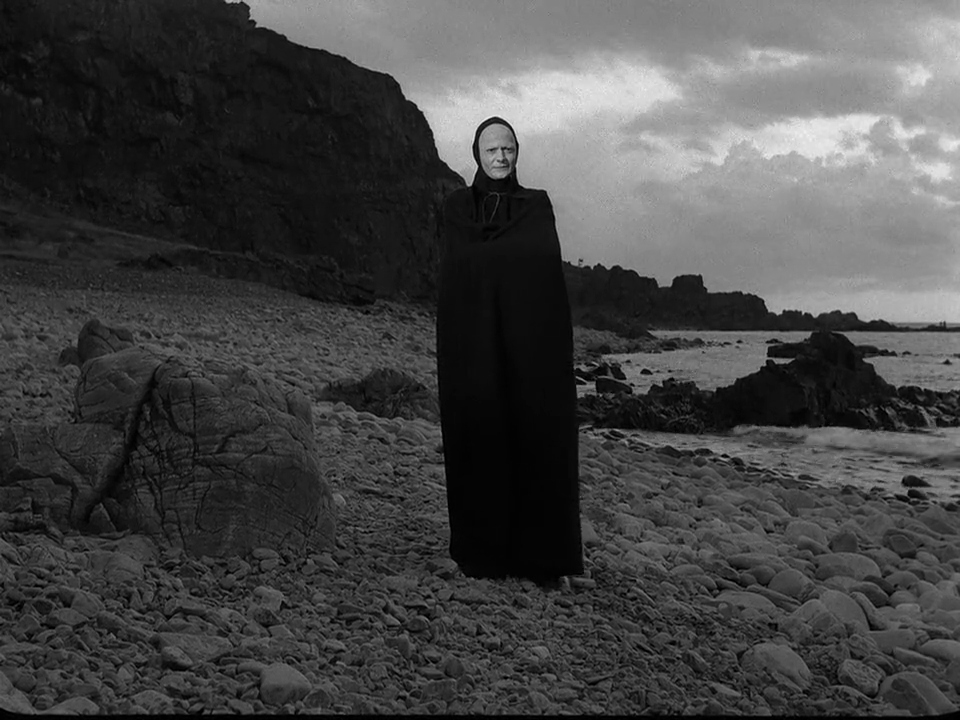
I was nineteen when I first watched The Seventh Seal, and I thought I was so deep for understanding it. I wrote a pretentious essay about existentialism and the death of God and the search for meaning in a meaningless universe.
I watched it again at twenty-seven, and I realized I hadn’t understood anything.
The image everyone knows is the knight playing chess with Death on a beach. It’s become iconic, parodied, referenced everywhere. But the film itself is stranger and sadder and more human than that image suggests.
The knight, Antonius, has just returned from the Crusades. He’s spent years killing in the name of God, and now he’s come home to find his country ravaged by plague. People are dying everywhere. Flagellants roam the streets, whipping themselves, begging for forgiveness. The church offers no comfort, only fear and guilt.
And Antonius doesn’t know if God exists. He’s spent his whole life in service to a God who has never answered, never shown himself, never offered any proof of his existence. And now Death has come for him, and he’s desperate for just a little more time. Time to find meaning. Time to understand. Time to do one meaningful thing before the end.
So he challenges Death to a game of chess. And Death, amused, accepts.
What struck me on my second viewing is how much of the film is about ordinary people just trying to survive. There’s a family of traveling actors—a husband, wife, and baby—who represent simple, uncomplicated joy. They don’t worry about the meaning of life. They just live it. They perform their plays, they eat their meals, they love each other.
And there’s the knight’s squire, Jöns, who is a complete cynic. He doesn’t believe in God, doesn’t believe in meaning, doesn’t believe in anything. But he’s also the most moral character in the film. He saves a girl from being raped. He shows kindness to strangers. He does good things not because he believes in heaven or hell, but simply because they’re the right things to do.
The film ends with the famous “Dance of Death”—Death leading a chain of people over a hill, silhouetted against the sky. It’s one of the most haunting images in cinema. But what I remembered this time is that the family of actors escapes. The knight’s final act—his one meaningful gesture—is to distract Death long enough for them to slip away.
He doesn’t find God. He doesn’t find meaning. He doesn’t get answers to any of his questions. But he saves three innocent people. And maybe that’s enough. Maybe that’s all we can do—protect the people who still know how to love, how to laugh, how to live simply.
I’m still not sure if I “understand” The Seventh Seal. But I don’t think Bergman wanted us to understand it. I think he wanted us to sit with the same questions Antonius sits with: Why are we here? What does it mean? Is there anything beyond this?
And maybe the answer is: we don’t know. We’ll never know. But we can still play the game. We can still make our moves. We can still try to do one good thing before the end.