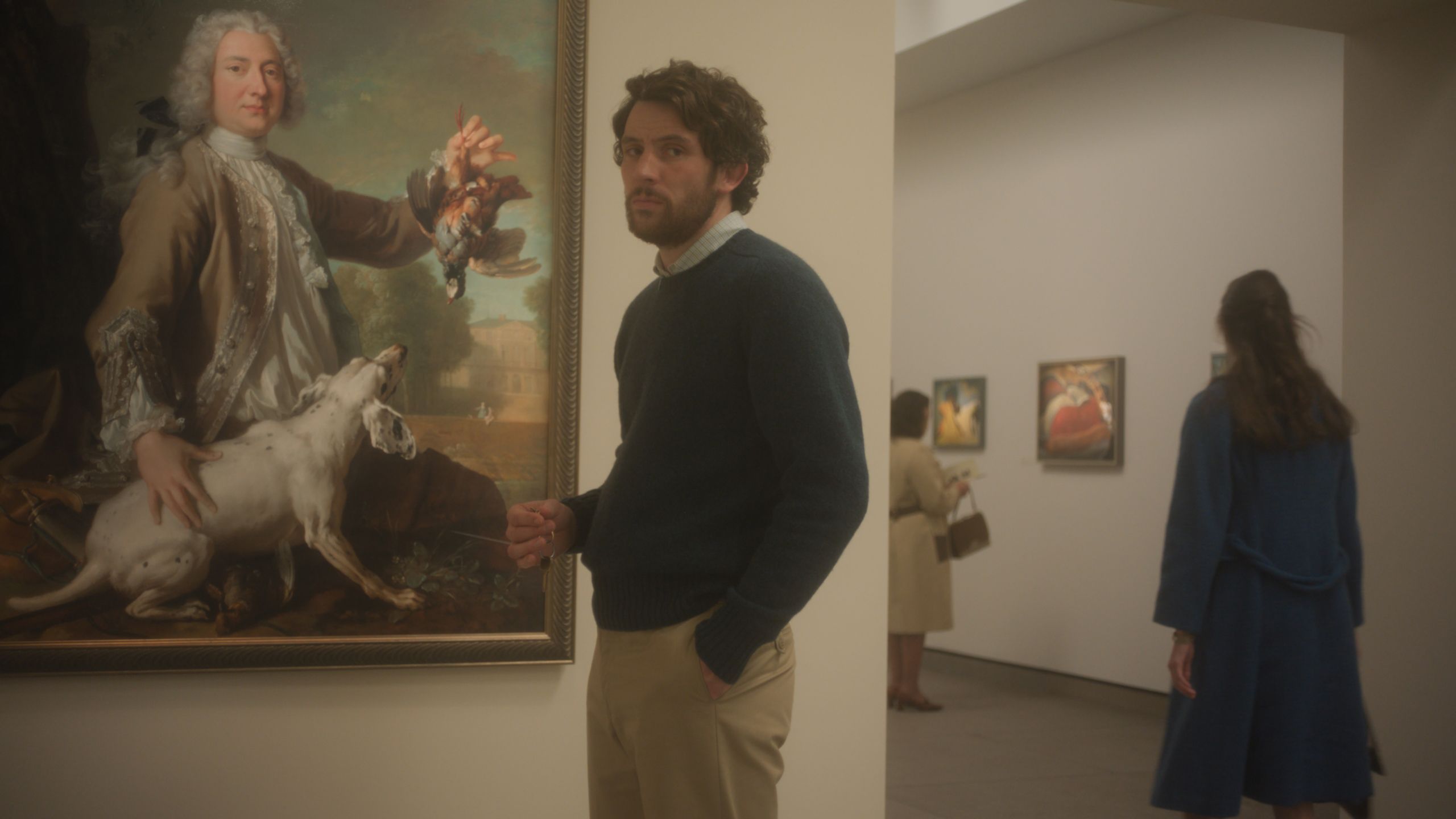
This might be the quietest, clumsiest “heist film” I have ever seen. The title is a massive irony—there is no “mastermind” here, only a man trapped by life, shivering in the chill of 1970. Kelly Reichardt’s The Mastermind is not about the thrill of crime or the genius of a criminal plan. It is about the mundane reality of desperation, about what happens when an ordinary person tries to do something extraordinary and discovers that even crime is just another form of tedious labor.
J.B. steals Arthur Dove’s paintings not because he understands art, but perhaps because they are the only splash of color he can grab from a suffocating era overshadowed by Vietnam. He is not a criminal mastermind; he is a security guard, a man with no particular skills or ambitions, who sees an opportunity and takes it without fully thinking through the consequences. Reichardt denies us the thrill of the crime. Instead, she shows us the embarrassment of untied shoelaces, the sound of dropped keys, and the long, meaningless waiting.
I am fascinated by this banality of sin. J.B. thought crime would be his escape from the cage of routine, only to discover that life on the run is just another form of tedious labor. He sits in a boarding house room, surrounded by stolen paintings he does not understand, listening to Walter Cronkite report on a distant war, and realizes that nothing has changed. He is still alone. He is still trapped. He is still searching for something he cannot name.
What Reichardt understands, what makes her films so powerful, is that most of our lives are not made up of dramatic moments but of waiting, of boredom, of small frustrations and disappointments. J.B.’s crime does not transform him or liberate him. It simply adds a new layer of anxiety to his already anxious existence. He has to hide, he has to lie, he has to live with the constant fear of being caught. And for what? For paintings he does not even like, for money he cannot spend without drawing attention to himself.
In that boarding house room, with Walter Cronkite reporting on a distant war in the background, he clutches those abstract paintings—still unsure of what, exactly, he is looking for. This image stays with me. J.B. surrounded by art he does not understand, in a room that is not his home, listening to news of a war he is not fighting, living a life that feels increasingly unreal. He thought stealing the paintings would give his life meaning, would make him someone other than a security guard living a small, forgettable life. But instead, he has simply traded one form of emptiness for another.
What I love about The Mastermind is its refusal to glamorize or dramatize. Reichardt is interested in the texture of ordinary life, in the way that even extraordinary events are experienced through the mundane details of daily existence. J.B. is not a hero or an anti-hero. He is just a person, flawed and confused and searching for something he cannot articulate. And in that ordinariness, there is a profound truth about what it means to be human.