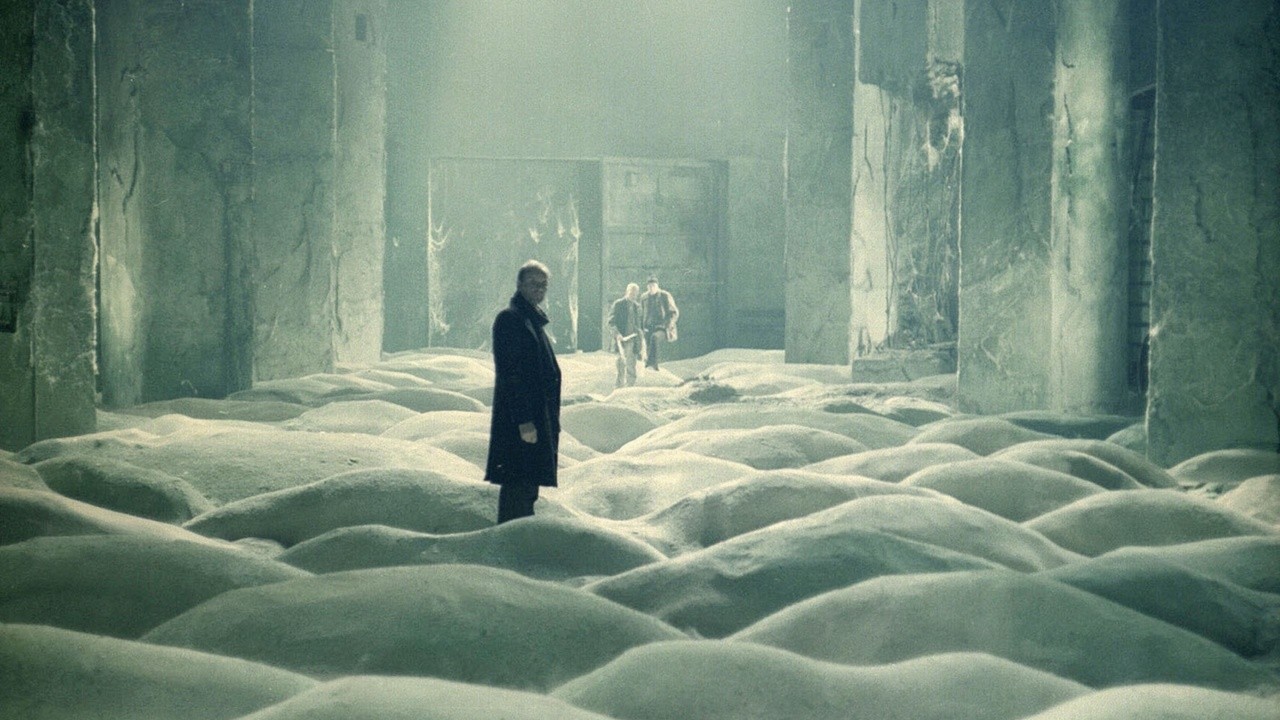
I watched Stalker on a rainy Sunday afternoon when I was supposed to be doing something productive. Instead, I sank into my couch for nearly three hours and let Tarkovsky pull me into his Zone—that forbidden, mysterious place where wishes supposedly come true.
Honestly? I’m still not sure what happened in this film. And I think that’s exactly the point.
There’s this guide, the Stalker, who leads two men—a writer and a scientist—through this dangerous, off-limits area to reach a room that grants your deepest desire. But the whole journey feels less like an adventure and more like walking through someone’s fever dream. The landscape shifts. The rules don’t make sense. Time stretches and contracts. And by the end, nobody even enters the room.
What stayed with me wasn’t the destination but the walking itself. So much walking. Through water, through ruins, through grass and rubble. The camera just sits there, watching them move through this decaying world, and you start to feel the weight of each step. I kept thinking: this is what searching feels like. Not dramatic, not heroic—just exhausting and uncertain.
There’s a moment when they’re sitting by a stream, and the Stalker talks about faith. He’s the only one who still believes in something, while the other two are drowning in cynicism. The writer thinks everything is meaningless. The scientist wants to destroy the room. And the Stalker just… believes. Even though his life is miserable, even though the Zone has taken everything from him, he still believes there’s something sacred here.
I cried during that scene. Not the loud, cathartic kind of crying—the quiet kind that sneaks up on you. Because I recognized that stubbornness, that refusal to give up on meaning even when the world gives you every reason to.
The film ends with the Stalker’s daughter, a disabled girl who can move objects with her mind. She sits alone, staring at glasses on a table, and slowly—almost imperceptibly—they start to slide. It’s the only “miracle” in the entire film. And it happens in the most ordinary, domestic setting imaginable.
I don’t know if I “understood” Stalker. But I felt it. In my bones. In the way you feel rain soaking through your clothes, or the way you feel the absence of someone you love. Tarkovsky doesn’t want you to understand. He wants you to experience. To sit with the discomfort. To let the images seep into you like water into soil.
Would I watch it again? Probably not anytime soon. It’s too heavy, too demanding. But I’m glad I watched it once. Some films change the way you see. This one changed the way I wait.