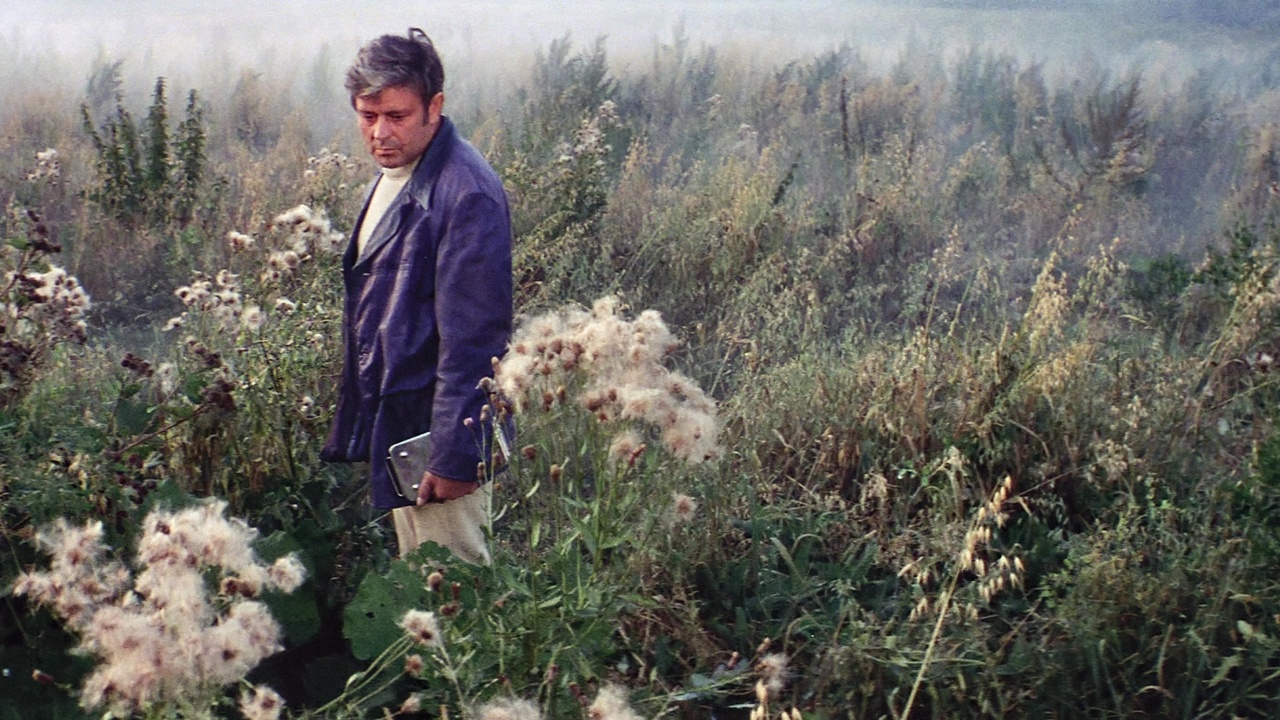
I tried to watch Solaris three times before I finally made it through. The first two times, I fell asleep. Not because it’s boring—though it is slow—but because Tarkovsky’s rhythm is so hypnotic, so deliberately paced, that my brain just… surrendered.
The third time, I watched it at 2 AM when I couldn’t sleep anyway. And suddenly, it clicked.
The premise sounds like science fiction: a psychologist travels to a space station orbiting a mysterious planet, where the crew is being haunted by physical manifestations of their memories. But this isn’t Alien or 2001. There are no monsters, no action sequences, no grand revelations. Just people sitting in rooms, talking quietly, trying to make sense of the impossible.
The main character, Kris, is visited by his dead wife. Except she’s not a ghost—she’s real, solid, made of atoms. The planet has somehow reached into his memory and reconstructed her. And she doesn’t know she’s not real. She thinks she’s herself. She has all her memories, all her emotions, all her love for him.
What would you do? If the person you lost came back, but you knew they weren’t really them—would you accept it? Would you love them anyway?
I kept thinking about my own losses while watching this. The people I’ve loved who are gone, not through death but through distance, through time, through the slow erosion of connection. If I could have them back, even as imperfect copies, would I want that? Would it be enough?
There’s a scene where Kris’s wife realizes what she is. She understands that she’s not the original, that she’s a construct made from someone else’s memory. And she breaks down. Because even though she’s “not real,” her suffering is real. Her confusion is real. Her love is real.
That scene destroyed me. Because it asks: what makes us real? Is it our bodies? Our memories? Or is it simply the fact that we feel, that we suffer, that we love?
The film is long—nearly three hours—and much of it is just people sitting, thinking, staring out windows at the swirling surface of Solaris. Tarkovsky forces you to slow down, to match his rhythm, to sit with these questions instead of rushing toward answers.
By the end, I still didn’t have answers. But I had spent three hours thinking about love, memory, and what it means to be human. And somehow, that felt like enough.
Also, there’s a five-minute sequence of cars driving through a tunnel that has absolutely nothing to do with the plot. It’s just… cars. In a tunnel. For five minutes. And it’s strangely beautiful. That’s Tarkovsky for you.