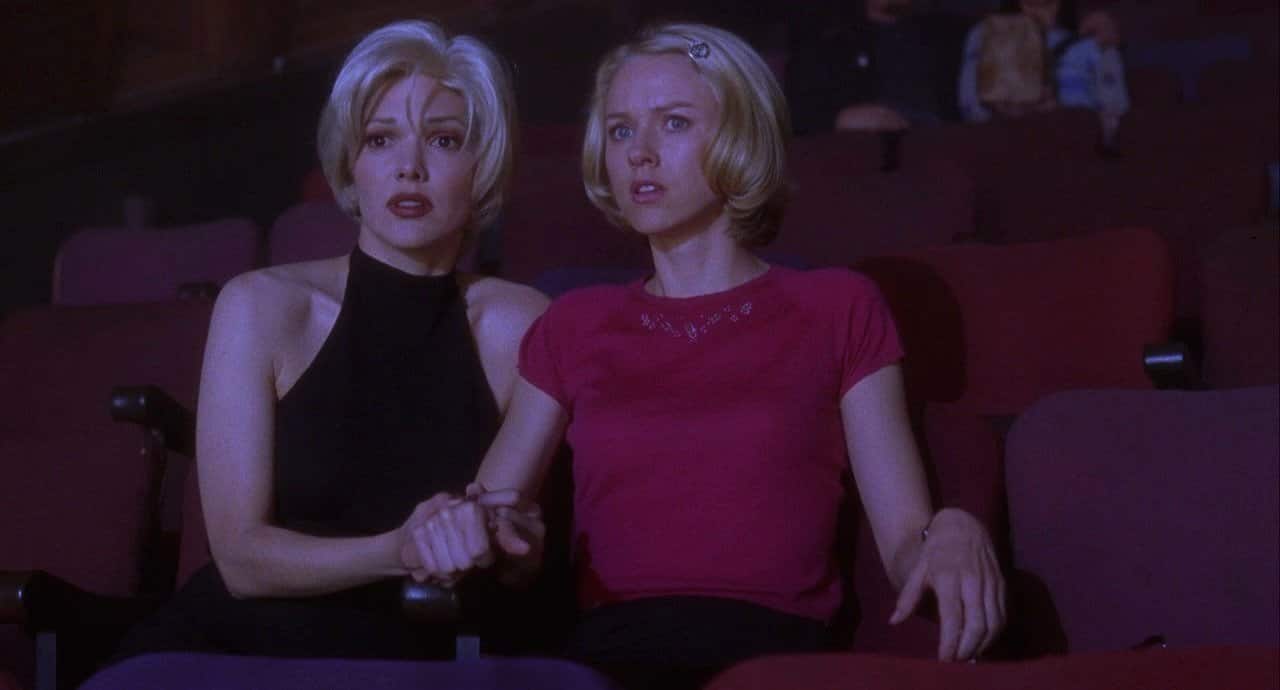
I have no idea what this film is about, and I’ve watched it four times.
Every time I think I’ve figured it out, David Lynch pulls the rug out from under me. Is it a dream? A dying fantasy? A critique of Hollywood? All of the above? None of the above? Lynch isn’t telling, and honestly, I don’t think he cares if we “get it.”
What I do know is that Mulholland Drive is one of the most emotionally devastating films I’ve ever experienced, even though I can’t fully explain why.
The first two-thirds feel like a classic Hollywood mystery. Betty, a bright-eyed actress, arrives in Los Angeles and befriends Rita, a woman with amnesia. They try to solve the mystery of Rita’s identity. They fall in love. It’s dreamy and romantic and tinged with danger. And then, about two hours in, everything breaks apart.
Suddenly Betty is Diane, a failed actress consumed by jealousy and rage. Rita is Camilla, a successful actress who has left her behind. The love story becomes a nightmare. The dream becomes reality—or does reality become a dream? I still don’t know.
What I do know is that the scene in the diner, when Diane sits across from a hitman and orders the murder of the woman she loves, made me feel physically sick. Because I understood it. Not the murder itself, but the feeling behind it—the rage that comes from being abandoned, from watching someone you love choose someone else, from feeling invisible and worthless and consumed by bitterness.
And the scene at Club Silencio, where a woman sings “Llorando” and then collapses, but the singing continues because it was always a recording—that scene broke something in me. It’s about the illusion of authenticity, about how everything we think is real is just a performance, just a tape playing while we pretend it’s live.
I think Mulholland Drive is about Los Angeles, about Hollywood, about the way dreams curdle into nightmares. But it’s also about love, about desire, about the way we construct fantasies to avoid facing painful truths. Diane creates an entire dream world where she’s the hero, where she gets the girl, where everything works out. And then she wakes up, and reality is unbearable.
The film ends with a whisper: “Silencio.” Silence. And then a woman appears and says, “Silencio,” and vanishes. And I sat there in the dark, feeling like I’d just woken up from my own dream, disoriented and shaken.
Do I recommend this film? I honestly don’t know. It’s brilliant and maddening in equal measure. It will confuse you and haunt you and make you question everything. But if you’re willing to surrender to the mystery, to let Lynch take you on a journey without a map, it’s an experience you won’t forget.
Just don’t expect answers. Lynch doesn’t do answers.