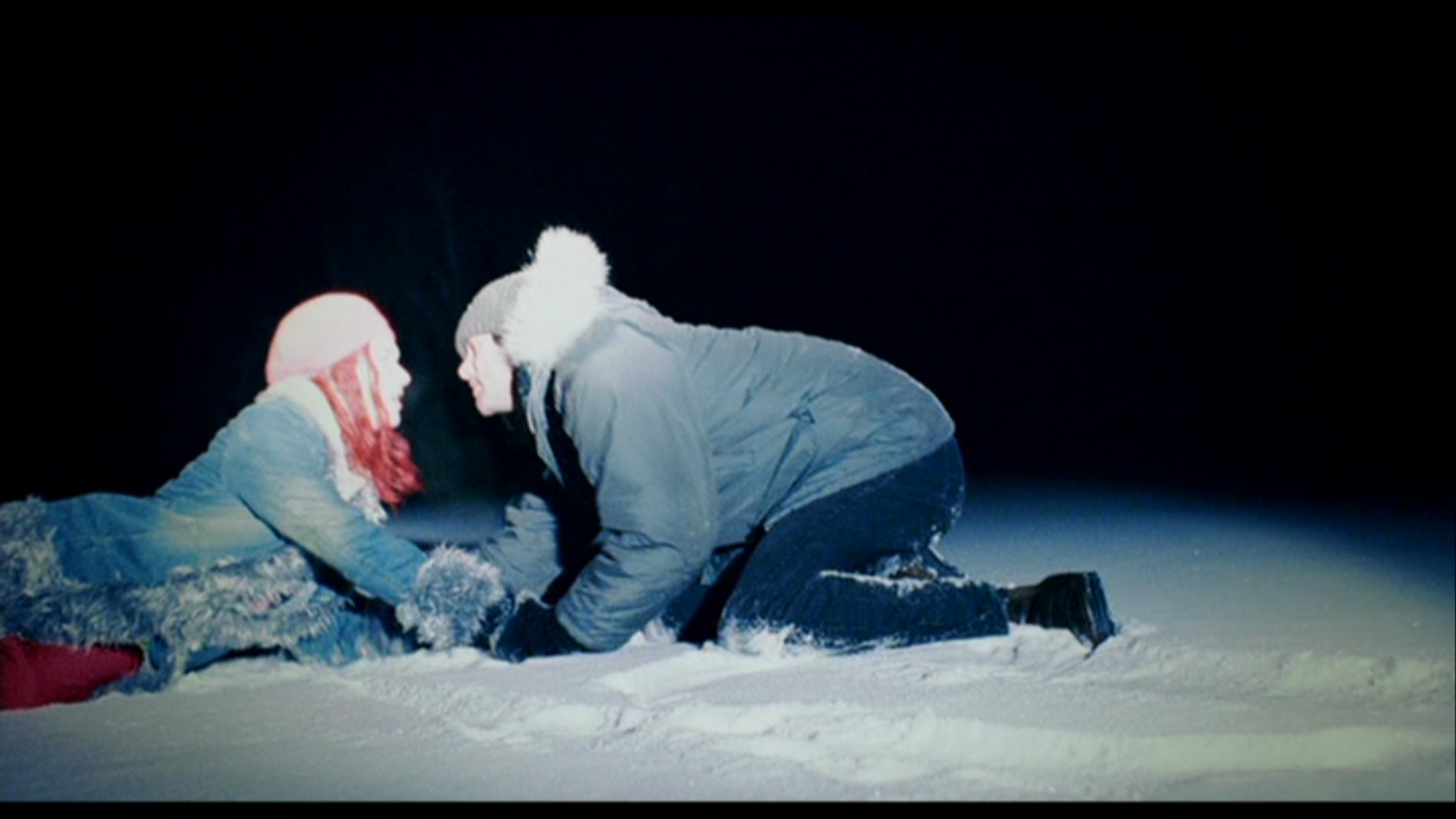
If I could, I would want that clinic, too. Just one button to erase the person who broke my heart. Who hasn’t fantasized about this? The ability to simply delete the memories that cause us pain, to wake up one morning and not remember the person who left, the words that were said, the promises that were broken. Michel Gondry’s Eternal Sunshine of the Spotless Mind takes this fantasy and follows it to its logical, heartbreaking conclusion.
We run through the labyrinth of Joel’s mind, watching familiar houses crumble and the face of a lover blur into static. The film’s structure mirrors the process of memory itself—nonlinear, fragmented, associative. We jump between different moments in Joel and Clementine’s relationship, seeing them fall in love, fight, grow apart, and finally decide to erase each other. But as the erasure process begins, Joel realizes that he does not want to forget. Even the painful memories are precious. Even the fights and the disappointments are part of what made their love real.
But the most heartbreaking moment isn’t the forgetting itself; it is when he desperately tries to hide Clementine in the deepest recesses of his memory, hiding her in the shame of his childhood, in corners where the erasers cannot find her. He pulls her into memories that have nothing to do with her, trying to preserve some trace of their relationship even as it is being systematically destroyed. It is a futile gesture, but it is also deeply human. We cannot let go. We cannot accept that something we loved is gone forever.
Even if the memory is full of cracks and fights, I wouldn’t want to wipe it clean. Those imperfections are the proof that we truly loved. This is what the film understands so profoundly. Love is not about the perfect moments; it is about the full spectrum of experience, the good and the bad, the joy and the pain. To erase the painful memories would be to erase the love itself, because they are inseparable. The fights are part of the love. The disappointments are part of the love. The ending is part of the love.
That final, simple “Okay” is an act of courage. Joel and Clementine discover that they have erased each other before, that they have been through this cycle of love and erasure and rediscovery. They listen to tapes of themselves explaining why they wanted to forget each other, cataloging all the flaws and incompatibilities that made their relationship impossible. And then, knowing all of this, knowing that they will probably hurt each other again, they choose to try anyway. They say “Okay” to the possibility of love, even knowing that it might end in pain.
It is the choice to fall again, knowing full well you might crash. This is what makes the ending so powerful. It is not a happy ending in the conventional sense. The film does not suggest that Joel and Clementine will live happily ever after. Instead, it suggests that they will probably make the same mistakes, have the same fights, hurt each other in the same ways. But they will do it anyway, because the alternative—a life without love, without risk, without the possibility of connection—is worse than the pain of loss.
Meet me in Montauk. Lie on the frozen river. Remember. Do not forget. These images from the film stay with me. The beach in winter, gray and desolate. The frozen river, cracking beneath their feet. The house falling apart around them as the memory is erased. These are not romantic images in the conventional sense, but they are deeply romantic in their honesty. They show us love as it actually is: messy, imperfect, fragile, and absolutely worth it.
I think about Eternal Sunshine whenever I am tempted to wish away a painful memory, whenever I want to forget someone who hurt me. The film reminds me that memory, even painful memory, is what makes us who we are. To erase the pain would be to erase part of myself. And so I choose to remember. I choose to carry the pain with me, along with the joy, along with all the complicated, contradictory feelings that come with having loved and lost. Because that is what it means to be human.